Opinion
As tonnes of illegal tobacco sneak in past our borders, we risk missing a threat that could cost us billions
The Conversation. Authors: Simon McKirdy, ÍíÒ¹¸£ÀûÍøÕ¾; Lotti Tajouri, Bond University; ÍíÒ¹¸£ÀûÍøÕ¾, and Rob Emery, ÍíÒ¹¸£ÀûÍøÕ¾
Australia regularly makes for its for international travellers.
food, animal products and plant material – from an apple, to or – can result in fines of , potential prosecution and cancellations of visitor visas.
There are good reasons for those rules: Australia has managed to keep its environment and agriculture . Yet the volume of goods coming into Australia makes it hard to catch everything, especially biosecurity threats coming in on ships.
And that’s a problem – because if tonnes of illegal tobacco keep getting past our border security, undetected, we risk increased exposure to invasive pests that could cost our farmers billions.
Why tobacco is a biosecurity risk
The caused by Australia’s illegal tobacco trade have been widely reported, including ongoing targeting tobacco retailers across several states.
But while the scale of the booming illicit trade is well known, its biosecurity risks have received little public attention. This is a significant omission.
Around 575 tonnes of illegal tobacco products – cigarettes, loose leaf tobacco and vapes – were produced in Australia in 2024-25, according to .
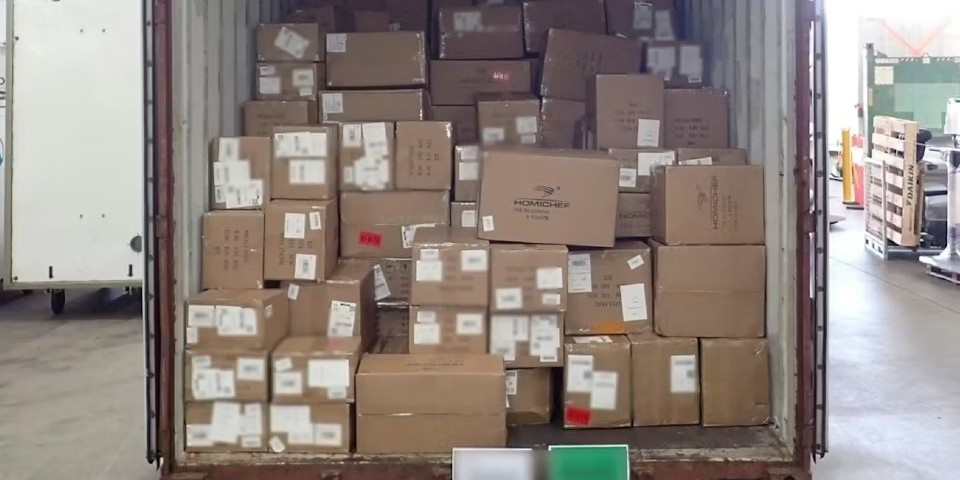
But far more – an estimated in the same year – was imported. It arrives ships coming in via China, Hong Kong, Singapore and the United Arab Emirates.
About of that was seized in 2024-25. So thousands of tonnes more have been getting in undetected.
Illicit tobacco is a dried plant product and a in its own right. The Australian government also as a potential carrier of many pests that pose significant threats to our agriculture and environment.
Khapra beetle: a high-impact hitchhiker
-resized.jpg?sfvrsn=b8672871_1 "1024px-CBP_Finds_13_Live_Khapra_Beetles_in_JuJubes_(37740935192) resized")
One such pest is the , a known hitchhiker on ships.
This tiny insect, just 1.6–3mm long, infests grain and other dry organic material, rendering it unfit for human or animal consumption. It’s the to Australia’s .
An incursion of khapra beetle would result in loss of access to key overseas markets, estimated at over 20 years. Prevention is critical.
Native to India, khapra beetles have in a wide variety of products, from food (such as ) and other products (such as a box of in Australia last year), to packaging and machinery.
The larvae are exceptionally resilient and can hibernate in sea containers .
Khapra beetle has been numerous times at our border, with a marked increase . Those extra detections came after the federal government introduced to address the growing risk of khapra beetles arriving in sea containers.

This home in Western Australia had to be wrapped in plastic and fumigated in 2007, after a newly arrived couple from the UK discovered khapra beetles and larvae in their belongings.
One notable detection was in 2007, when a couple who had migrated from the United Kingdom found khapra beetles in belongings that had spent six weeks at sea.
The woman discovered beetles inside a mug and, worse, larvae in her wrapped wedding dress. It turned out many other belongings were infested. The entire two-storey house was shrink-wrapped in plastic and fumigated.
Importantly, it was a successful eradication, and the grain industry was protected.
How illegal tobacco raises the risks of invasive pests
Any trade that’s illegal is more likely to use sea containers that are not cleaned, fumigated or adequately documented.
Added to this, tobacco is often sourced from with fake declarations.
In addition to khapra beetles, other pests could be introduced from imported tobacco.
One example is . These beetles are common in Australian grain storages as well as households. However, the introduction of resistant strains could make it more difficult to control in museums, galleries and libraries – where they can cause to preserved animal specimens or book-bindings – as well as in .
Citizen scientists have reported the presence of tobacco beetles more than 200 times using the free photo app. This tool was developed by Dr Darryl Hardie and one of us (Rob Emery) to make it easier for the public to report pests they find in various household commodities, including in their tobacco.
Community vigilance, combined with strong border controls, remain essential for protecting Australia from the biosecurity consequences of illicit imports.
Why we need to boost detection at our ports
Public debate about curbing illegal tobacco sales has largely focused on enforcement efforts. However, the first, most effective line of defence is at the border.
The relatively low interception rate for a bulky and easily recognisable commodity such as tobacco raises broader questions about our ability to detect less visible threats – like tiny beetles – that may carry even greater biosecurity risks.
Investment in maintaining and strengthening Australia’s border biosecurity must remain a national priority. Detection of illicit tobacco arriving at our ports urgently needs to improve.
Failure to implement effective biosecurity controls across all Australian ports exposes our environment and our farmers to risks worth billions of dollars.
Thanks to for his contribution to this article.
, Professor of Biosecurity and Deputy Vice Chancellor of Global Engagement, ; , Associate Professor, Genomics and Molecular Biology, Biomedical Sciences, ; , and , Associate Professor, Centre for Biosecurity and One Health,
This article is republished from under a Creative Commons license. Read the .
Opinion
As tonnes of illegal tobacco sneak in past our borders, we risk missing a threat that could cost us billions
Posted on
Topics