Opinion
The Silence of the Lambs introduced the world to forensic entomology – but how much has the science changed since?
This article was originally published in The Conversation UK by Paola A. Magni, ÍíÒ¹¸£ÀûÍøÕ¾ and Noemi Procopio, University of Lancashire.
In the early 1990s, crime-loving television audiences could choose mainly between cozy, fictional detective series such as Columbo and Murder, She Wrote. The US docuseries Unsolved Mysteries brought a few real cold-case investigations to light, but coverage of forensic science on screen was still relatively simple.
Then, in May 1991, The Silence of the Lambs was released. Based on , this big-budget thriller was darker, more disturbing and psychologically complex than most films of the time.
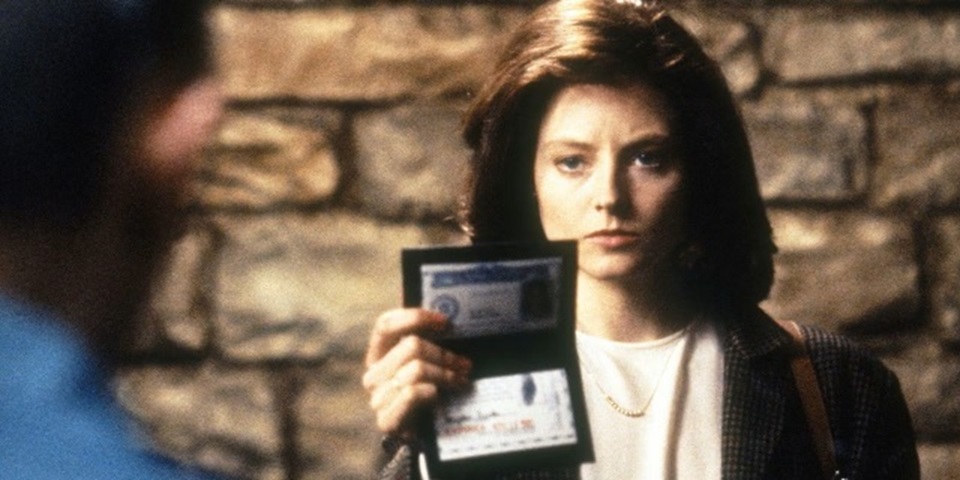
The protagonist, FBI trainee Clarice Starling (played by Jodie Foster), is a young woman working in a predominantly male environment – who is often underestimated by her colleagues. When she discovers key evidence through a suspenseful process of extraction from a young victim’s mouth, viewers are introduced to a field of criminal investigation they may never have considered before: .
Some kind of seed pod? No, sir … that’s a bug cocoon.
– the scientific study of insects – is one of the . And the application of insects to criminal cases dates back almost as far. In the forensic text (1247), written by Chinese investigator Sung T’zu, flies attracted to traces of blood on a sickle helped identify a murderer.
However, it was not until the late 19th century that forensic entomology was formalised as a scientific discipline – thanks largely to the studies of . Influenced by his experiences on the battlefield, the French vet began investigating which insects were attracted to animal and human remains at .
These days, are used to tell criminal investigators about the , whether , and if any have contributed to their death.
Human remains are commonly colonised by and their maggots. But in The Silence of the Lambs, Starling was faced with something more unusual: the cocoon of a (Acherontia atropos).
The cocoon, which the serial killer inserts into his victims’ throats, is identified by two entomologists who are clearly . Otherwise, they would have thought twice before cutting open the only piece of insect evidence without seeking permission for such a .
The film introduces such as – the intentional alteration of a crime scene – and a perpretrator’s , relating to any distinctive methods they use.
Today, many of us working in forensic entomology and (the study of what happens to organisms between death and discovery) are still told our work is “just like The Silence of the Lambs�. But 35 years after the film’s release, forensic entomology is no longer limited to microscopes, forceps and entomologists working alone.
Today’s criminal investigations often feature complex interactions between environmental conditions, decomposition processes and human activity. This makes collaborations between multiple scientific (and non-scientific) disciplines essential.
How the science has progressed
In the two decades preceding the film’s release, the biomedical and life sciences journal PubMed on the subject of forensic entomology. Since then, there have been .
Methods used for insect identification and age estimation have changed dramatically. Today, and chemical techniques can identify insect species and determine their stage in the lifecycle and . These techniques are especially useful in , where samples may have been damaged or improperly stored.
Insects are also playing an increasingly accurate role in determining the . As well as feeding on decomposing remains, they help involved in decomposition. These microbial communities change in predictable ways over time – even in – offering investigators a further indicator of the postmortem interval.
(insect skin) provide definitive species and age signatures. These can associated with identification by people, and the time and costs of DNA sequencing.
Forensic entomology has also expanded into areas such as entomotoxicology, where insects feeding on decomposing remains are analysed for the presence of drugs, toxins or other chemical compounds. It is even possible to recover the DNA of the individual on whom an insect has been feeding .
In The Silence of the Lambs, investigators assume that “water leaves no trace evidence of any kind�. Yet today, aquatic forensic researchers examine not only but , and associated with .
Revisiting the moth cocoon scene
The film’s infamous moth cocoon scene – which saw the extracted evidence collected with forceps, then taken for visual inspection at a museum – would be approached rather differently today.
Firstly, are now recommended over forceps to avoid damaging the sample. Modern forensic practice aims to preserve specimens by taking photographs before any manipulation. Where possible, insects are reared to the adult stage which is often easier to identify with certainty.
Rather than opening the cocoon, it could be compared as is with museum reference collections or analysed using technology such as . This would confirm the species and estimate its developmental stage without altering the evidence.
Many , including some , have demonstrated how forensic entomology can be a key tool in the investigation of current and historical crimes – as well as of and .
However, technological advances are not enough. The reliability of forensic entomology depends on appropriate crime scene protocols, evidence collection, ongoing research and, perhaps most importantly, specialist training and attention to detail. These qualities are certainly embodied by agent Starling.
But there is another major difference since the film came out in 1991. Unlike Starling’s experience, women now represent . They contribute to a discipline that has become far more diverse, collaborative and scientifically advanced than the one portrayed in The Silence of the Lambs.
This article features a reference to a book included for editorial reasons, and a link to bookshop.org. If you click on this link and go on to buy something from bookshop.org, The Conversation UK may earn a commission.
, Professor of Forensic Sciences, School of Law and Policing, and , Associate Professor of Forensic Science,
This article is republished from under a Creative Commons license. Read the .
Opinion
The Silence of the Lambs introduced the world to forensic entomology – but how much has the science changed since?
Posted on
Topics