
News
Innovative outbreak simulation brings real-world epidemiology to life for MIDSC students
Master of Infectious Diseases, Surveillance and Control (MIDSC) bringing new and genuinely innovative teaching and learning
Students in the Master of Infectious Diseases, Surveillance and Control (MIDSC) experienced a highly immersive and innovative learning activity this semester, led by Associate Professor Charlotte Oskam, Unit Coordinator for BMS501 Zoonoses, Pandemic Surveillance and Preparedness.
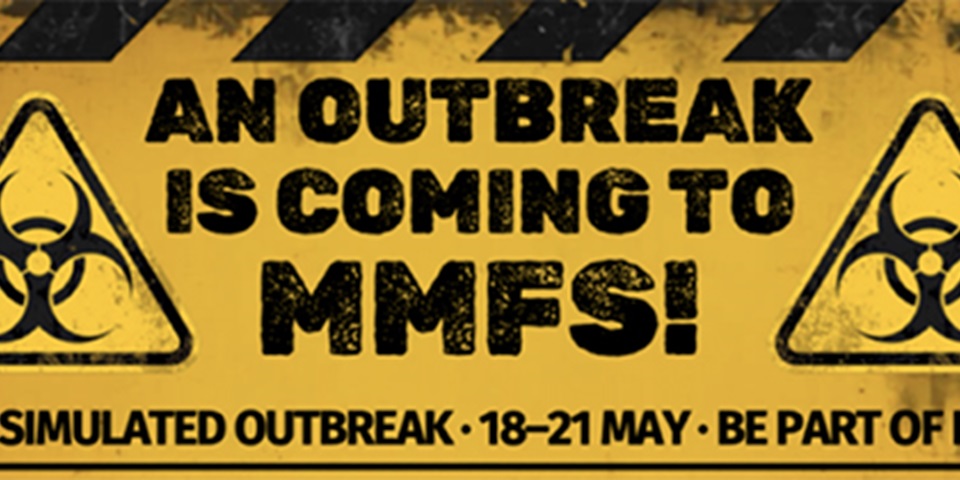
The activity centred on a campus-wide digital outbreak simulation that engaged staff and students across MMFS, generating realistic epidemiological data for students to analyse under pressure.
A campus becomes the outbreak zone
Using the EpiGames app, 126 participants across campus created a dynamic outbreak scenario, with transmission patterns evolving in real time.
The simulation unfolded in two waves:
- First wave: 11 infections, no fatalities, with relatively low transmission
- Second wave: a more virulent strain, including serious illness and at least two deaths following a system reset
Participants’ everyday movement and testing behaviours directly influenced infection spread, creating authentic and unpredictable case data.
Students lead the investigation
On the final day of the simulation, MIDSC students stepped into the role of outbreak response teams. Working with the live data generated by participants, they:
- Analysed epidemiological patterns without prior knowledge of the pathogen
- Developed situation reports based on evolving case data
- Interpreted fictional intelligence briefings, including mosquito activity, bird sightings, and animal health on campus
- Conducted simulated field surveillance using a hands-on setup with specimens, plush animals, and anatomical models
- Selected and interpreted diagnostic tests, including rapid antigen testing via QR codes
- Performed simulated sequencing analysis following positive test results
- Produced press releases and final outbreak reports under time pressure
Students also had the opportunity to meet with simulation developer to better understand the underlying model.
Experiential learning with real complexity
A key strength of the simulation was its unpredictability. Students were required to interpret incomplete and sometimes conflicting data, including false positives—mirroring the complexity of real outbreak investigations.
The mystery pathogen was ultimately revealed to be a fictional hybrid of SARS-CoV-2 and Nipah virus, designed to produce unusual transmission patterns and clinical presentations that challenged students’ assumptions.
Crucially, the involvement of the wider MMFS community allowed students to work with genuine contact networks and case numbers, rather than pre-prepared datasets.
Building the next generation of outbreak responders
This simulation is a strong example of how MIDSC integrates innovative, research-informed teaching approaches to prepare students for real-world challenges. By combining digital tools, role-play, laboratory decision-making and communication tasks, the activity developed both technical skills and professional judgement.
Reflecting on the exercise, Charlotte noted that the experience has already inspired further enhancements for future iterations of BMS501, with plans to build on the realism and complexity of the simulation.
The success of the activity highlights the value of collaborative, campus-wide engagement in teaching and reinforces MMFS’s commitment to immersive and evidence-based education.
Congratulations Charlotte!
You can read more about our Master of Infectious Diseases, Survellence and Control here.